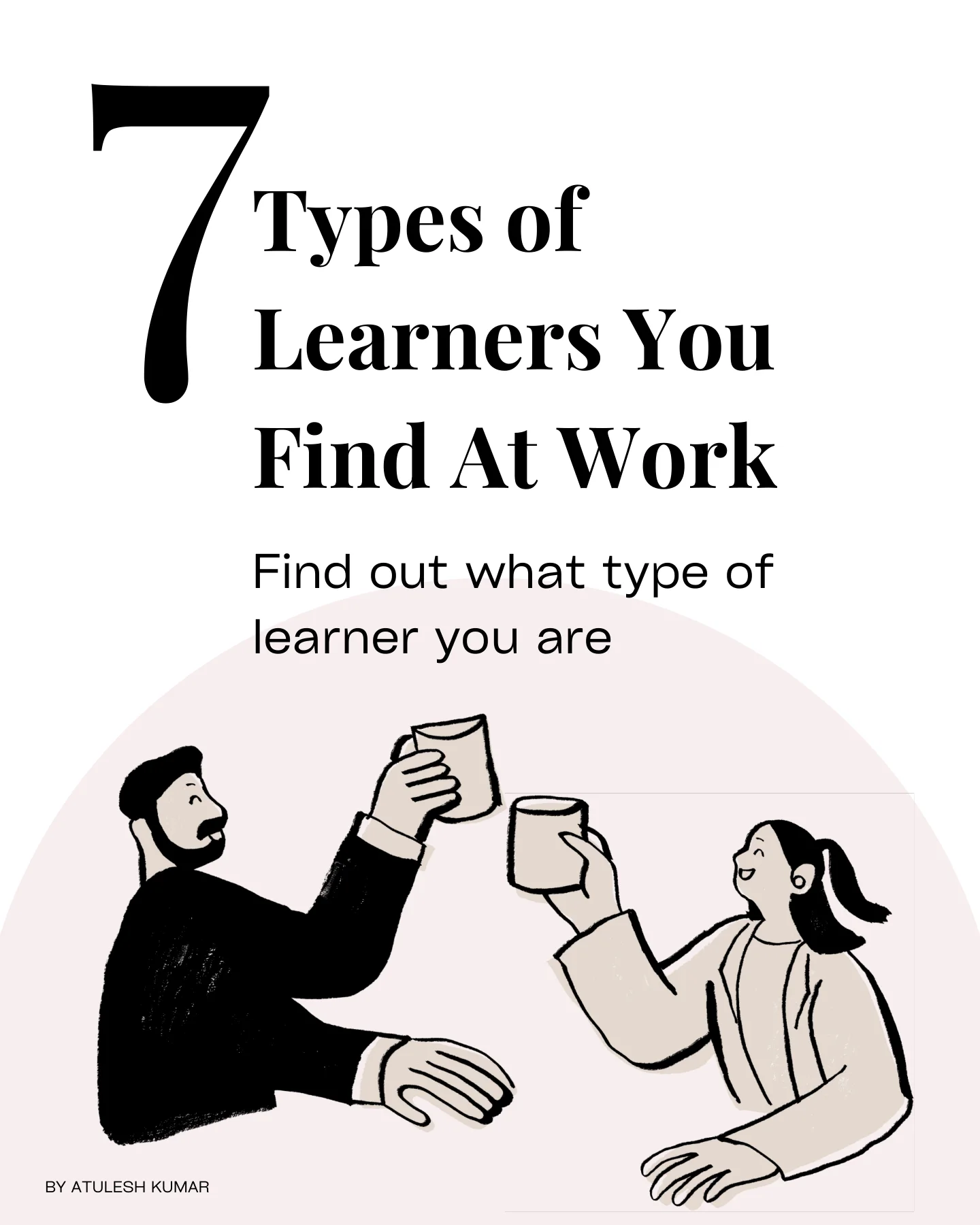
7 types of learners you find at work
Learning at work comes in many forms, some intentional and some accidental. Which type of learner are you?
 By Atulesh Kumar
In the professional world, learning isn’t just about attending a course or reading a book. It comes in many forms, some intentional, others accidental. And the way we learn often shapes not just our skillset, but our personality, mindset, and growth as individuals.
I’ve categorized a few learner types I’ve observed (and sometimes been myself!). These types might resonate differently depending on where you are in your career, whether you’re just starting out or decades in. I’ve also paired each with its positives and negatives.
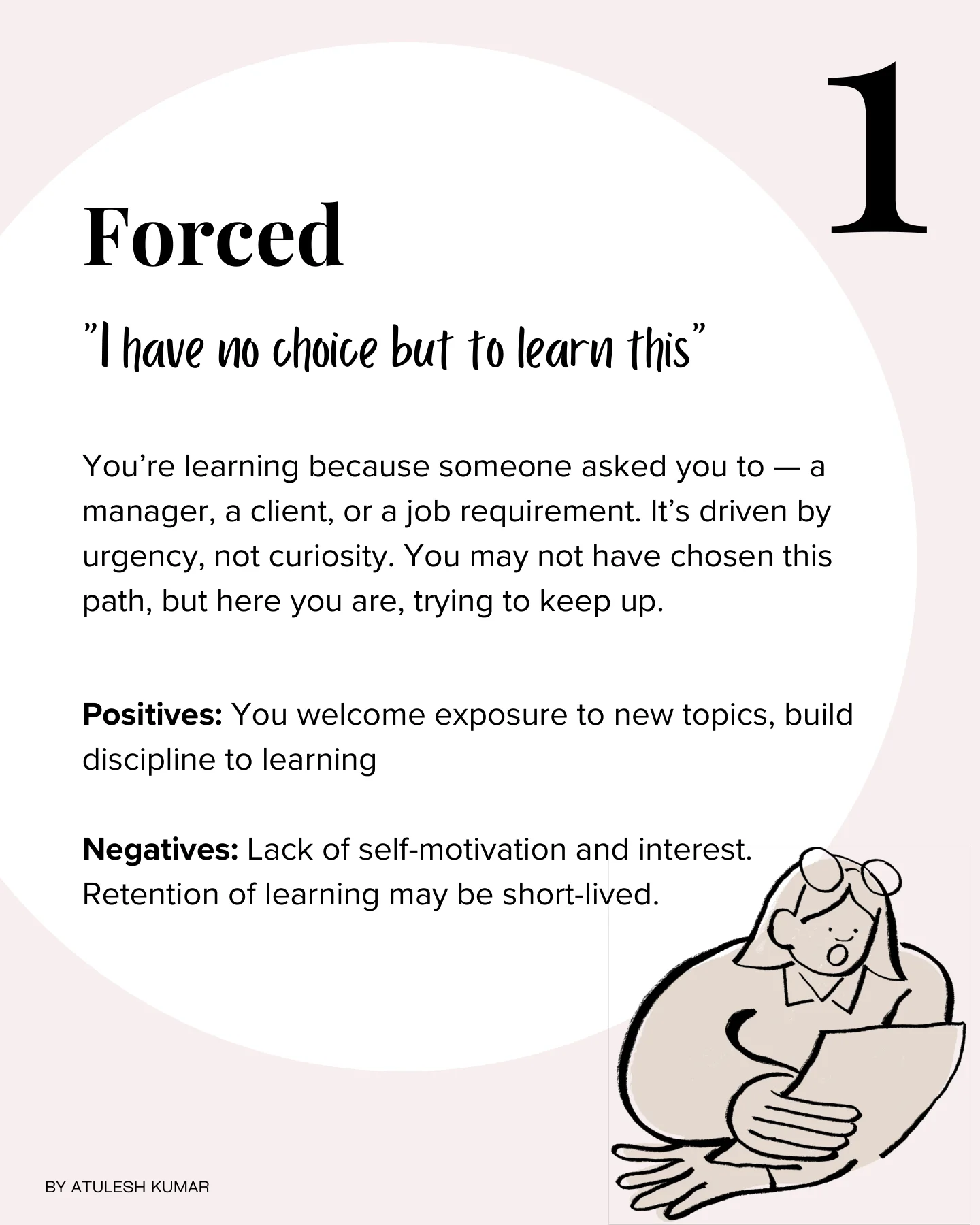
1. Forced
“I have no choice but to learn this.”
You’re learning because someone asked you to: a manager, a client, or a job requirement. It’s driven by urgency, not curiosity. You may not have chosen this path, but here you are, trying to keep up.
- Positives: You welcome exposure to new topics and build discipline in learning.
- Negatives: A lack of self-motivation and interest. What you learn may not stay with you for long.
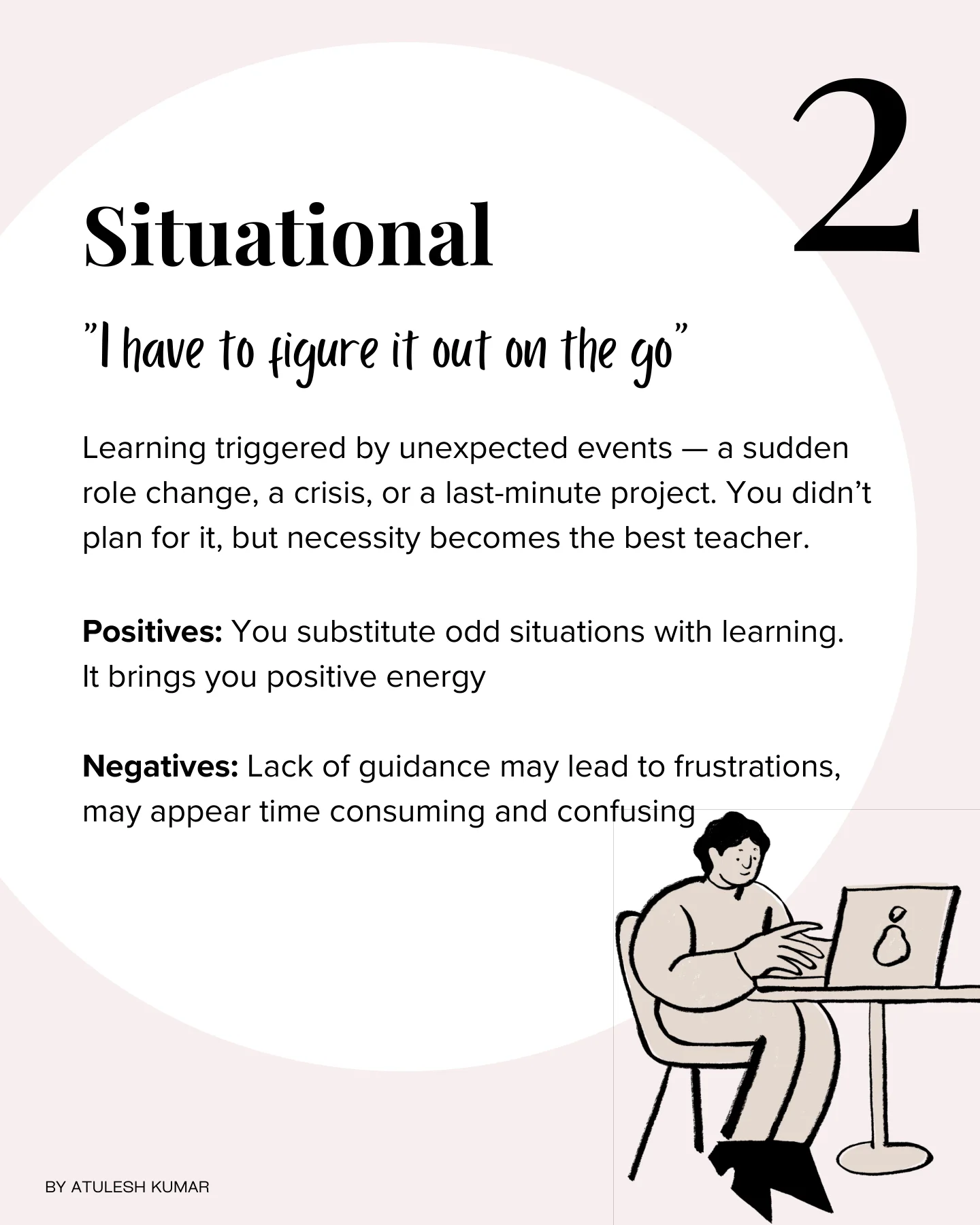
2. Situational
“I have to figure it out on the go.”
Learning triggered by unexpected events: a sudden role change, a crisis, or a last-minute project. You didn’t plan for it, but necessity becomes the best teacher.
- Positives: You turn odd situations into learning, and it brings you positive energy.
- Negatives: A lack of guidance can lead to frustration, and it can feel time-consuming and confusing.
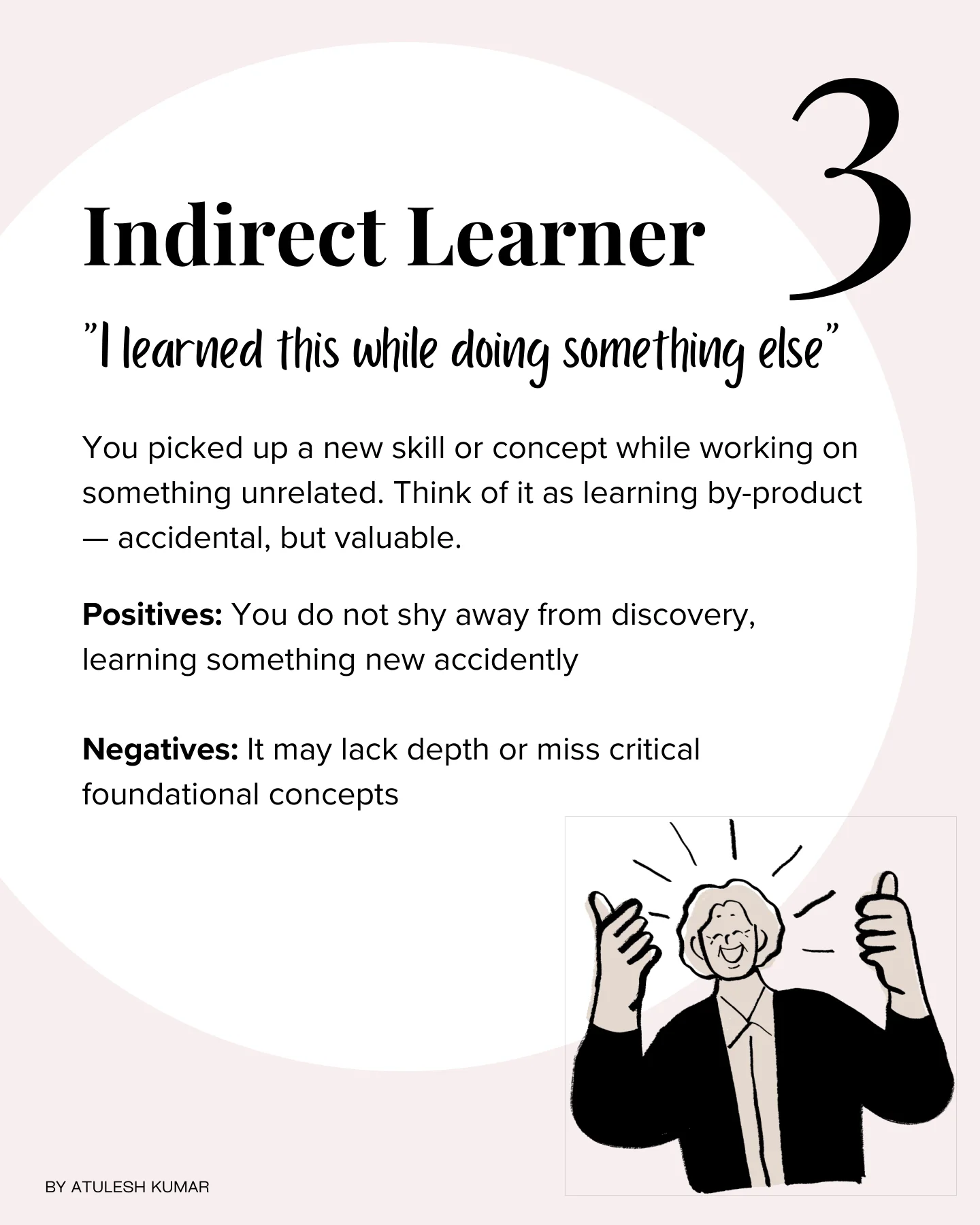
3. Indirect
“I learned this while doing something else.”
You picked up a new skill or concept while working on something unrelated. Think of it as a by-product of learning: accidental, but valuable.
- Positives: You don’t shy away from discovery, and you learn new things by accident.
- Negatives: It may lack depth or miss critical foundational concepts.
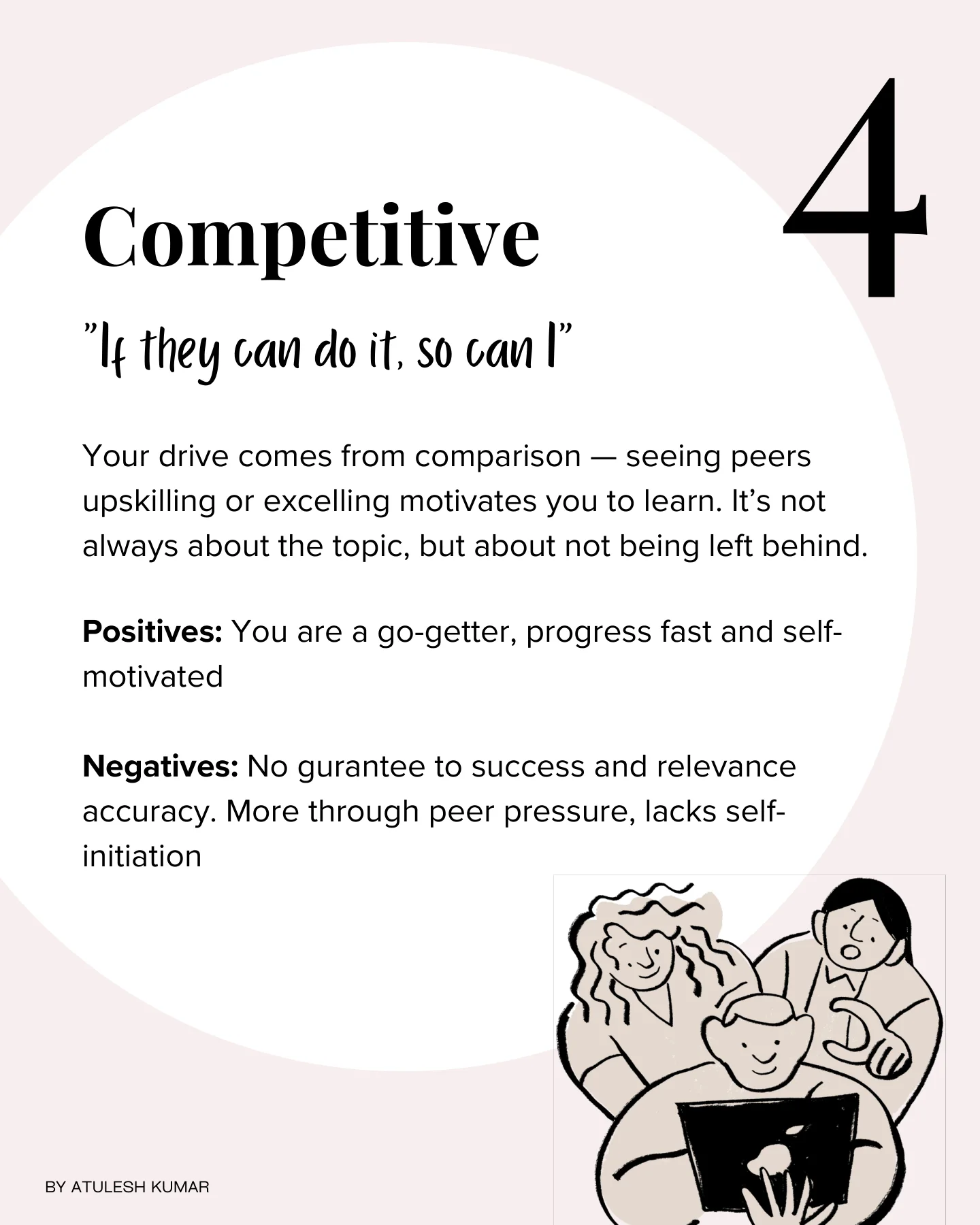
4. Competitive
“If they can do it, so can I.”
Your drive comes from comparison. Seeing peers upskill or excel motivates you to learn. It’s not always about the topic, but about not being left behind.
- Positives: You’re a go-getter who progresses fast and stays self-motivated.
- Negatives: There’s no guarantee of success or relevance. It runs more on peer pressure than on your own initiative.
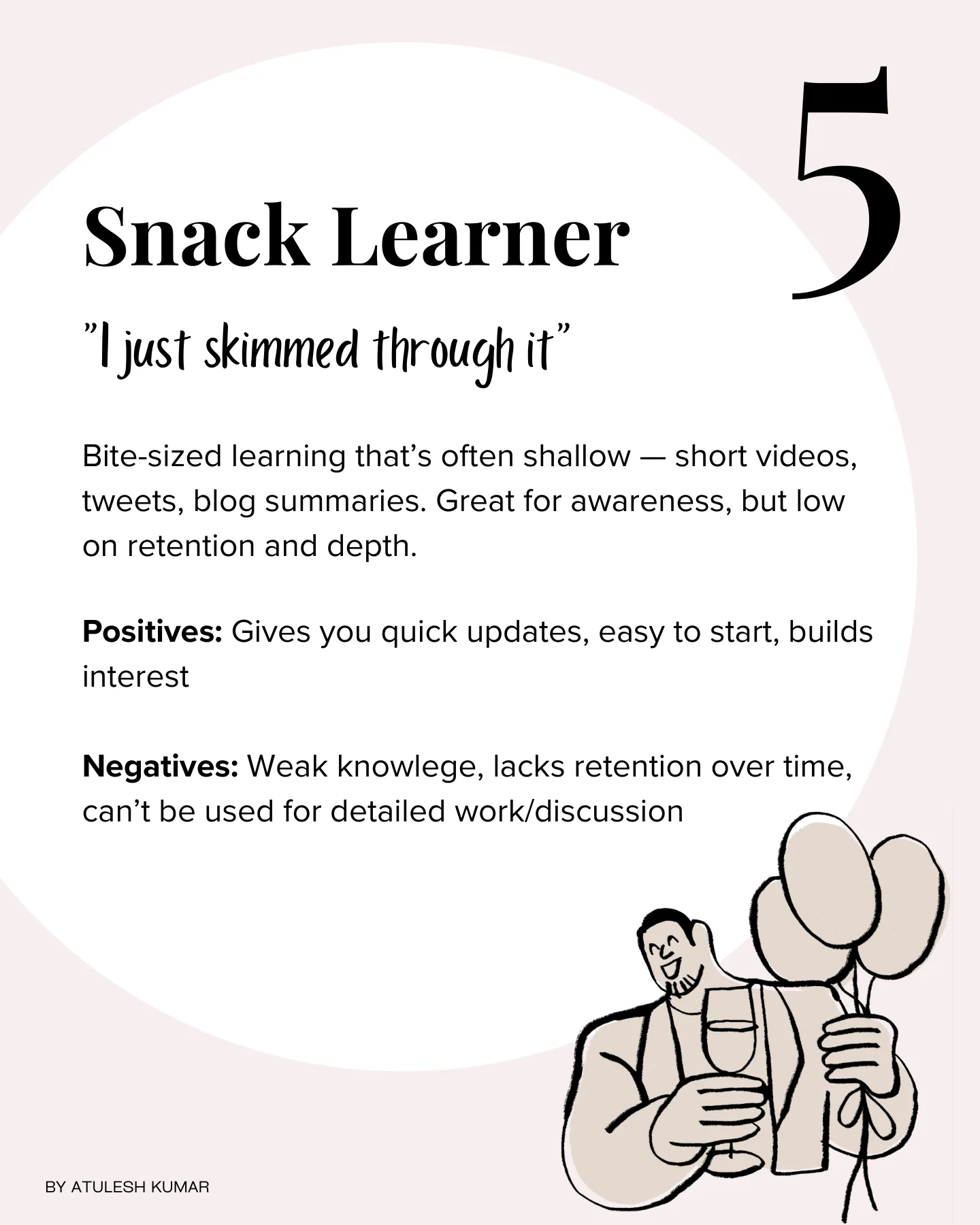
5. Snack learner
“I just skimmed through it.”
Bite-sized learning that’s often shallow: short videos, tweets, blog summaries. Great for awareness, but low on retention and depth.
- Positives: Quick updates, easy to start, and it builds interest.
- Negatives: Weak knowledge that fades over time, and it can’t carry detailed work or discussion.
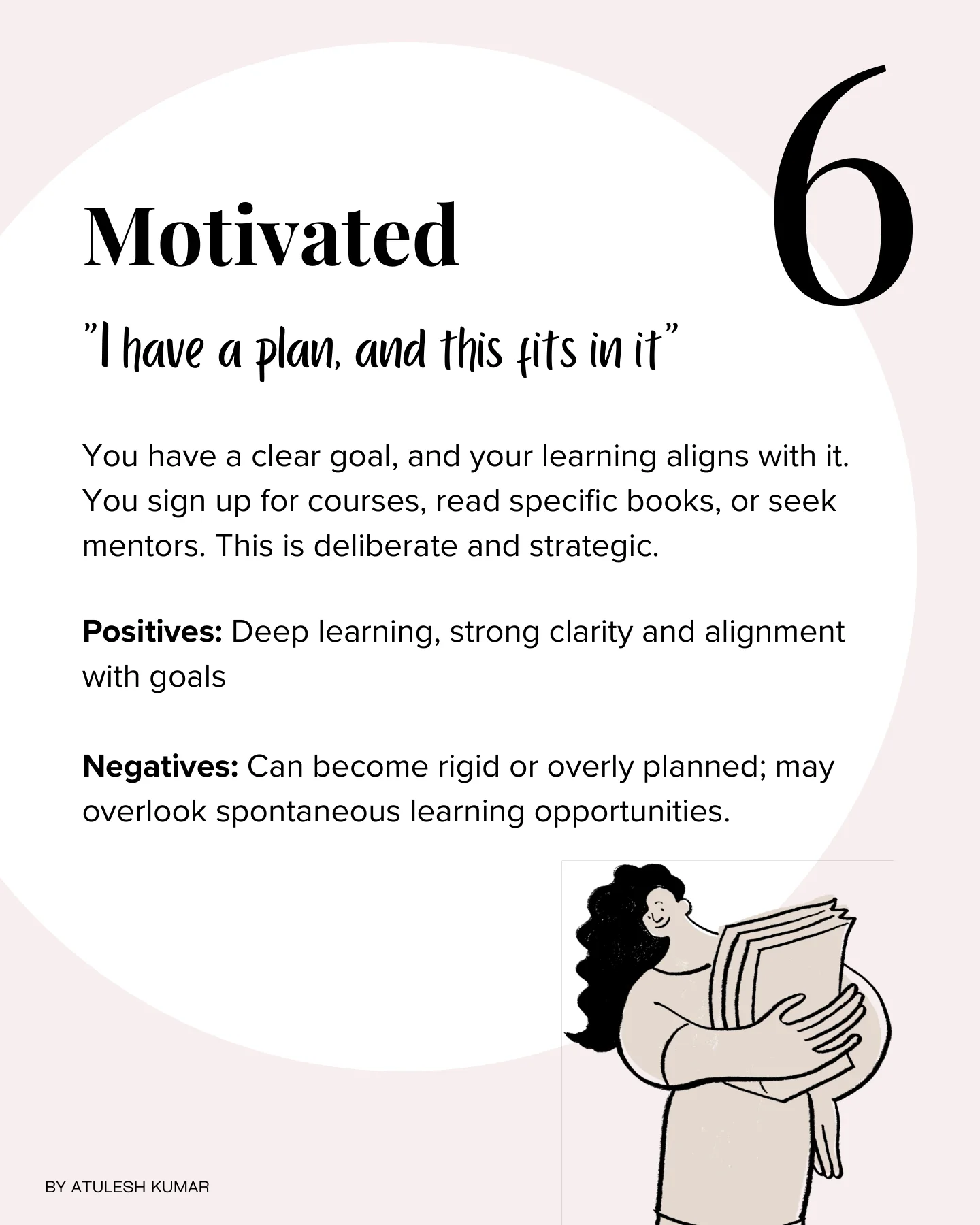
6. Motivated
“I have a plan, and this fits in it.”
You have a clear goal, and your learning aligns with it. You sign up for courses, read specific books, or seek mentors. This is deliberate and strategic.
- Positives: Deep learning, with strong clarity and alignment with your goals.
- Negatives: It can become rigid or overly planned, and you may overlook spontaneous learning opportunities.
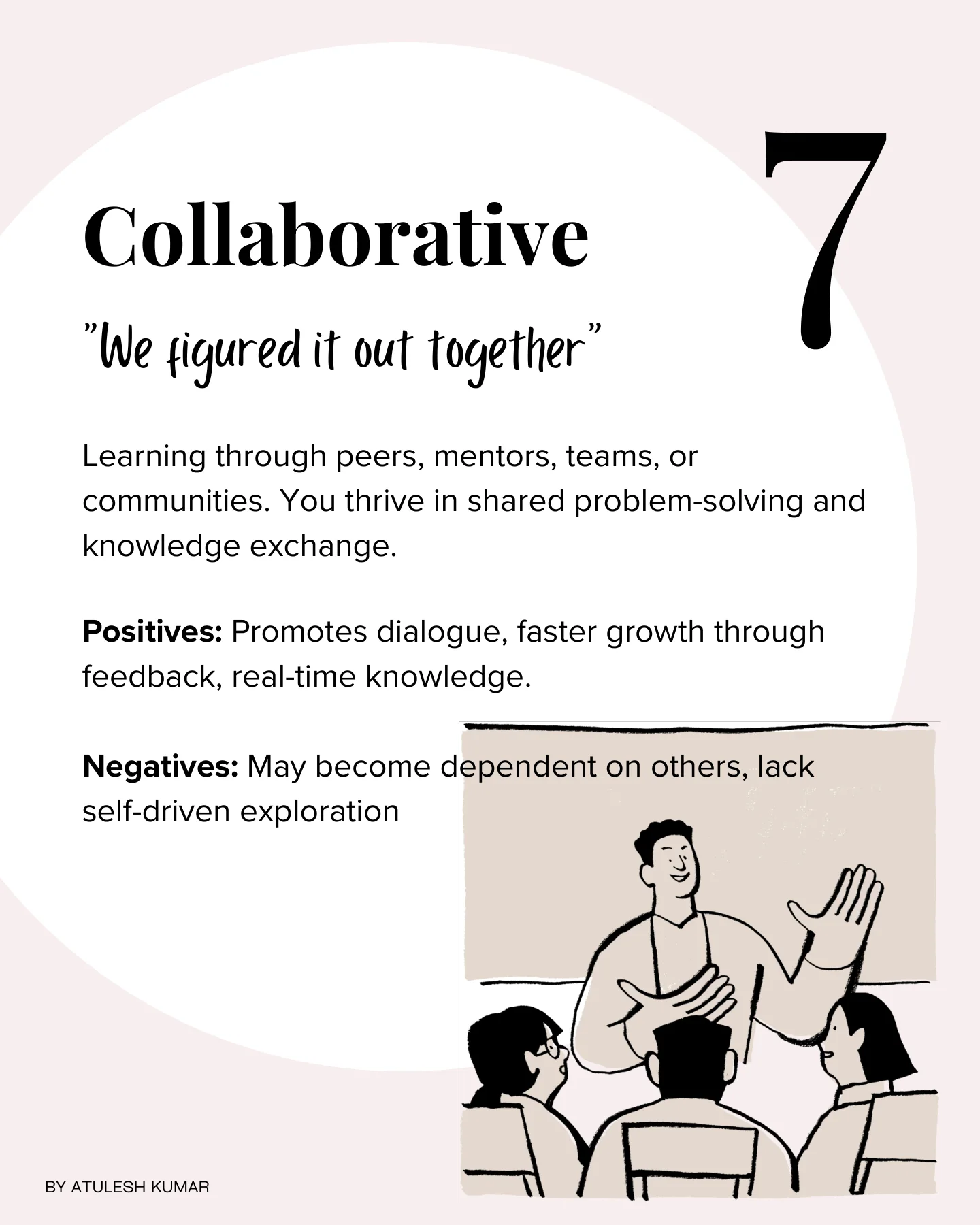
7. Collaborative
“We figured it out together.”
Learning through peers, mentors, teams, or communities. You thrive in shared problem-solving and knowledge exchange.
- Positives: It promotes dialogue, faster growth through feedback, and real-time knowledge.
- Negatives: You may become dependent on others and explore less on your own.
Which type of learner are you?
Each type is valid, actually. It depends on your stage of life and your career situation.
It becomes critically important to keep adding new skills and building knowledge through continuous learning. Make sure your learning often comes from self-motivation.
Count every critical or odd situation as a learning playground.
Building something complex? Let’s talk.